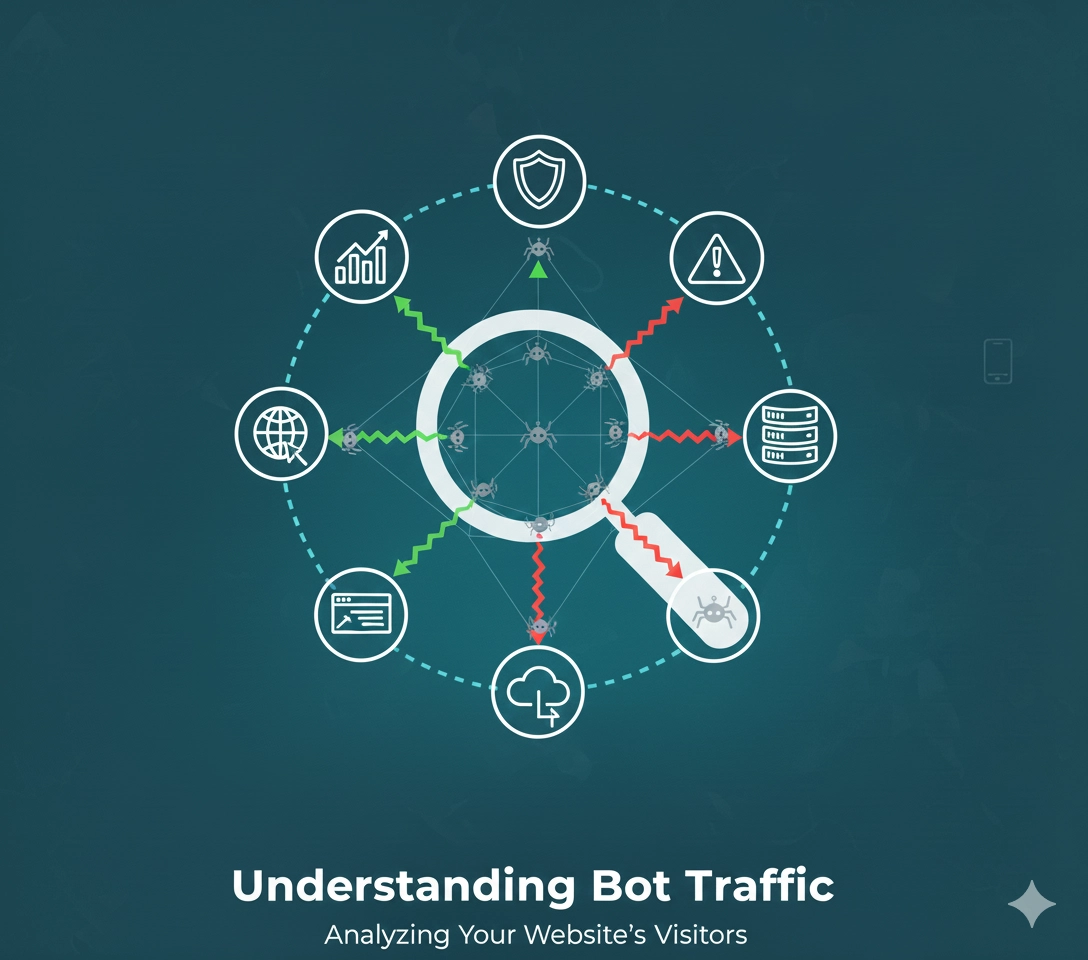
Bot traffic makes up a significant portion of internet traffic - some estimates suggest bots account for over 40% of all web traffic. Understanding and properly handling bot traffic is essential for any website owner.
Why Bot Traffic Matters
When you look at your analytics, are you seeing real human visitors or bots? This distinction is critical because:
- Analytics accuracy: Bots can skew your metrics, making it hard to understand real user behavior
- SEO insights: Search engine bots tell you how search engines see your site
- Security: Malicious bots can scrape content, attempt attacks, or steal data
- Performance: High bot traffic can impact server resources
Types of Bots
Not all bots are created equal. Here are the main categories:
Good Bots
- Search engine crawlers (Googlebot, Bingbot): Index your content for search results
- Monitoring bots: Check uptime and performance
- Social media bots: Generate link previews
Bad Bots
- Scrapers: Steal your content
- Spam bots: Post spam comments or forms
- DDoS bots: Attempt to overwhelm your server
- Click fraud bots: Generate fake ad clicks
How to Identify Bot Traffic
Modern bot detection relies on several signals:
- User agent analysis: Check the browser/bot identifier
- Behavior patterns: Bots often browse differently than humans
- IP reputation: Known bot IPs and data centers
- JavaScript execution: Many bots don’t run JavaScript
- Mouse movement: Humans move mice naturally, bots don’t
Best Practices
To properly handle bot traffic:
- Use robots.txt to control crawler access
- Implement rate limiting to prevent abuse
- Monitor your logs for unusual patterns
- Use specialized bot detection tools
- Separate bot analytics from human analytics
Understanding your bot traffic isn’t just about blocking bots - it’s about knowing who visits your site and why.
Test Which Bots Access Your Website
Want to see which bots can access your site right now? Use our free bot detection tools to test robots.txt rules and verify crawler access:
- SEO Bot Checker — Test Googlebot, Bingbot, and 4 search engines
- AI Bot Checker — Scan for 28 AI crawlers including GPTBot and ClaudeBot
- Social Media Bot Checker — Test Facebook, Twitter, LinkedIn previews
- SEO Tools Bot Checker — Verify Ahrefs, SEMrush, Moz access
Learn More:
- SEO Bots Guide — Optimize for search engine crawlers
- robots.txt Guide — Control bot access properly